KURAI Student Project
Julius's Jumping Dinosaur
Sprint a pixel dino through day, night and a boss battle — leap over cacti, rocks and birds, and see how far you can run.

SPACE to start / jump / restart · P to pause · M to muteTap the screen to start and jump
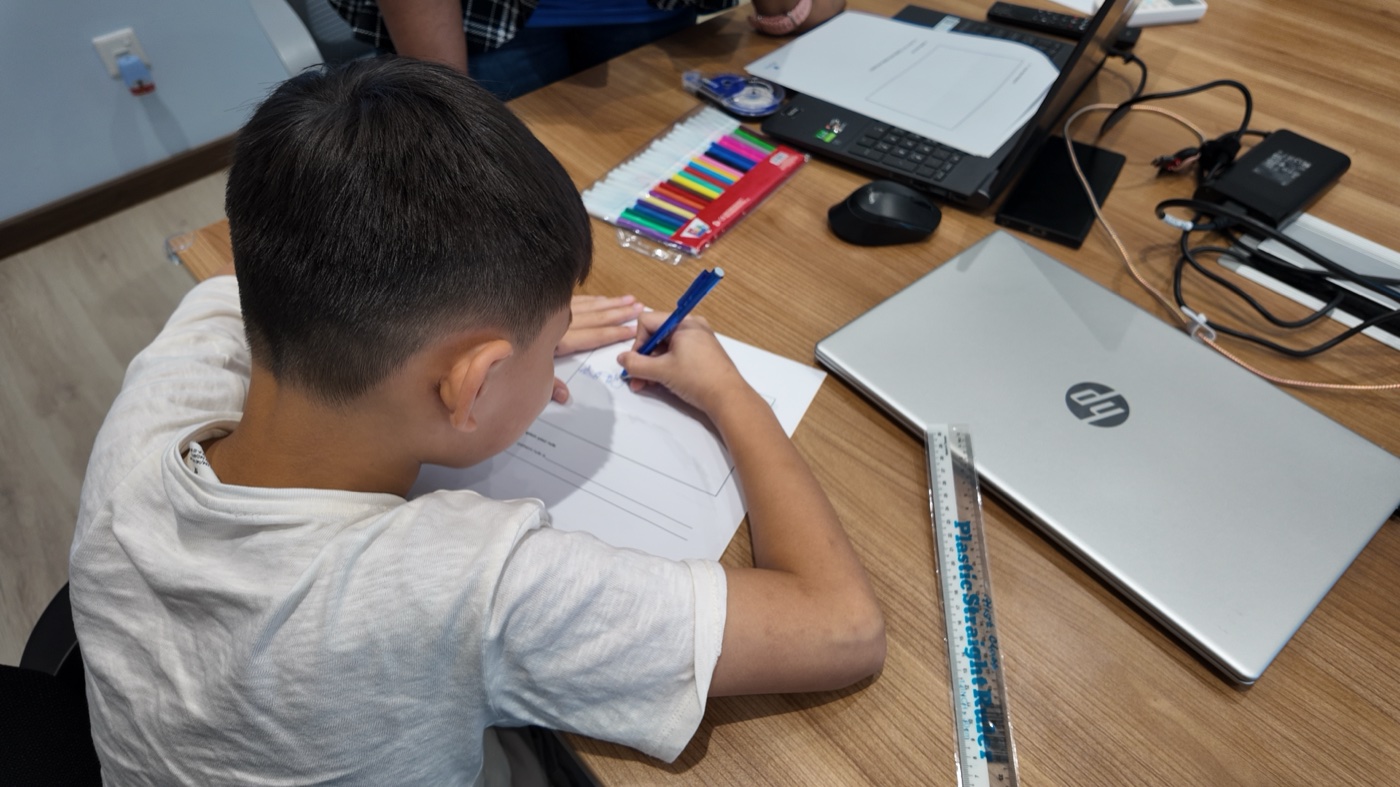
Julius mapping out the next obstacle on paper
How he made it
Five obstacle types.
One at a time.
Julius started with the smallest thing that mattered — breaking the idea down to a single character that could jump. No obstacles. No score. Just gravity, a ground line, and the spacebar.
Then he added one obstacle, then another, then another — prompting the AI for each new piece, then testing it against itself before moving on. Cacti became birds at three different heights. Spikes turned into rocks. By the end he had five obstacle types, each behaving on its own logic.
The final touches were Julius's own design: a day-night-boss theme system that switches as the score climbs, retro pixel art, an animated combo meter. He could explain why every score milestone existed at module wrap-up.
Step by Step
From a jumping square to a boss fight.
A jumping dino
Julius asked the AI: make a character that jumps when i press space, on an endless floor. The AI returned a working sprite. He spent the rest of the session tweaking the jump arc until it felt ‘just right’.
Obstacles, one at a time
One obstacle type per prompt, then testing the timing before moving on. can he also dodge birds at three different heights? — that's the prompt that introduced the bird variants. By the end there were five obstacle types.
Day, night, and the boss
Hit 1,500 and the world turns to night. Hit a million and a half (theoretically) and a boss arrives. Julius mapped every milestone in his notebook before wiring them up — and could explain why each milestone existed at the showcase.
The guide
How to play.
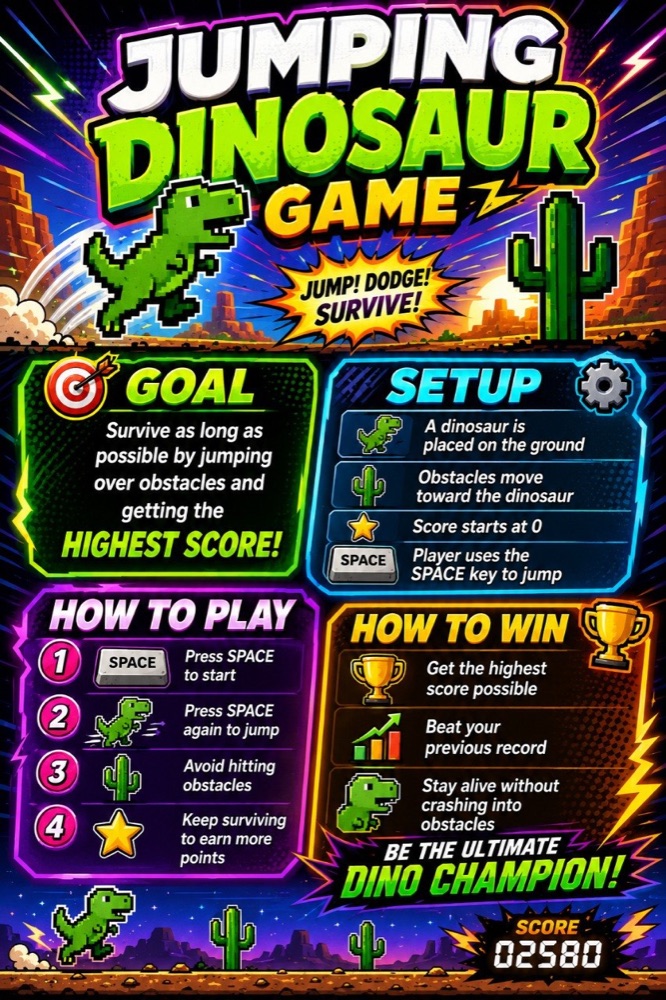
Julius also designed a how-to-play guide — the controls, the obstacles, and how the day-night-boss run works. Tap to view it full size.
Your child could build something like this.
Julius learned by making — paired with an instructor, prompting an AI, iterating on every detail. Your child can too.